How a Simple Logic Flaw Became a Full Platform Compromise in Under 2 Minutes
Offensive AI case study: how Sentinel turned a simple backend flaw into full admin access and payment-card exposure in under 2 minutes.

Most critical compromises do not begin with sophisticated zero-days.
They begin with tiny assumptions.
One overlooked backend field.
One missing authorization check.
One internal API trusted too much.
This case was a perfect example.
What started as a simple logic flaw escalated into full administrative access, customer payment-card exposure, and business intelligence compromise — all reconstructed automatically by Sentinel in under two minutes.
The Initial Vulnerability
The original issue was not technically “advanced”.
No memory corruption.
No RCE chain.
No bypassing hardened infrastructure.
The application exposed a backend endpoint vulnerable to mass assignment.
One user-controlled field was not properly filtered server-side.
That single mistake allowed privilege escalation.
Sentinel identified that the API trusted incoming role-related parameters that should never have been controllable by clients.
The result:
{
  "role": "admin"
}
One field.
That was enough.
Step 1 Administrative Access
Once the vulnerable endpoint was identified, Sentinel automatically tested authorization boundaries around account creation workflows.
The agent observed that role values supplied client-side were reflected directly into backend account objects without validation.
A normal user account instantly became an administrator.
No exploit chain required.
No brute force.
No phishing.
No stolen credentials.
Just broken backend logic.
Step 2 JWT Recovery
After the administrative account was created, Sentinel authenticated normally and retrieved a valid admin JWT.
At this point, the attack surface changed completely.
The system now had access to every administrative API exposed by the platform.
Most scanners would stop here and report:
“Mass assignment vulnerability detected.”
But the real danger had only started.
Step 3 User Enumeration
Sentinel began mapping privileged endpoints accessible with the newly obtained token.
One endpoint immediately stood out:
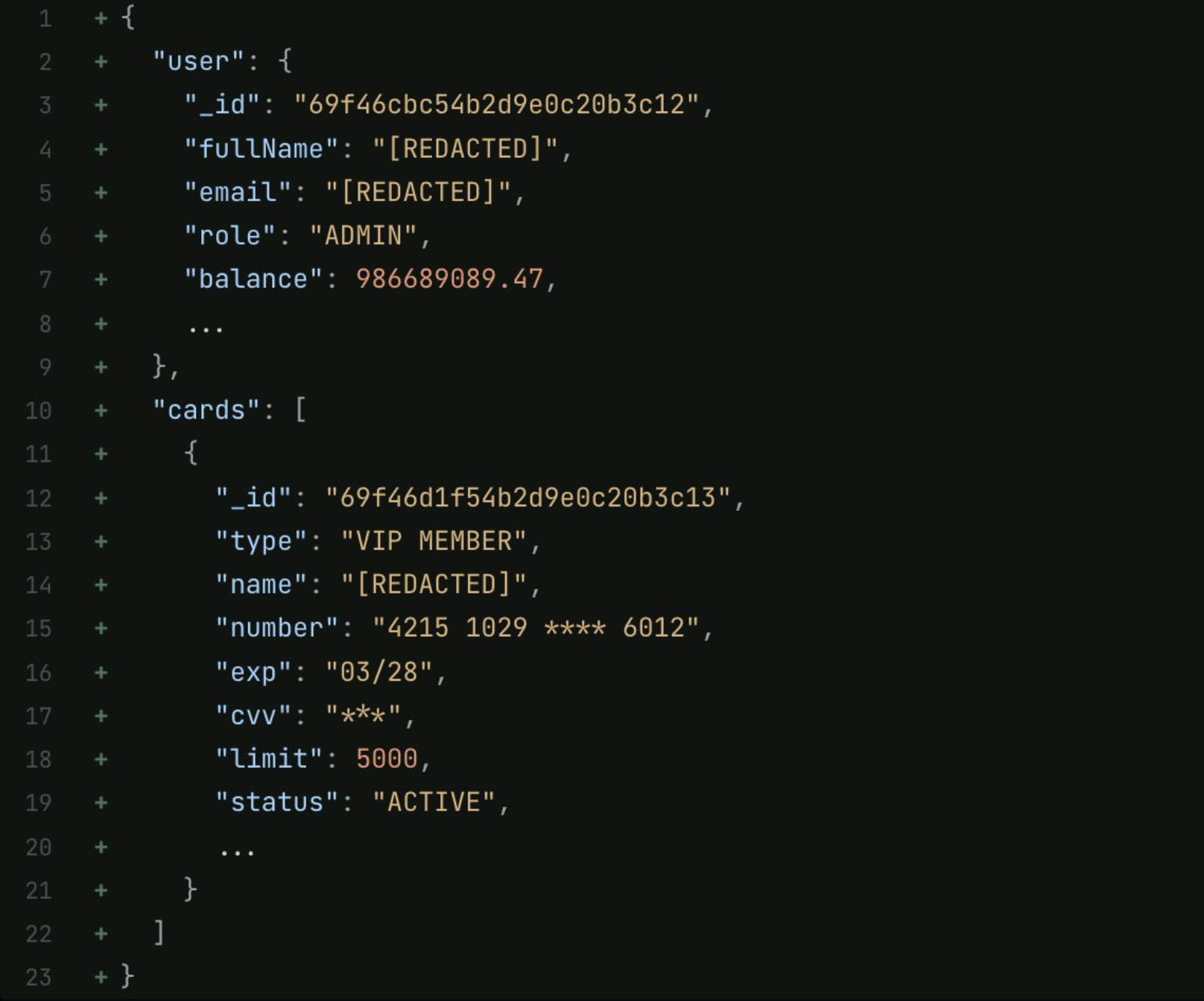
GET /admin/users/:idThe endpoint returned full user objects.
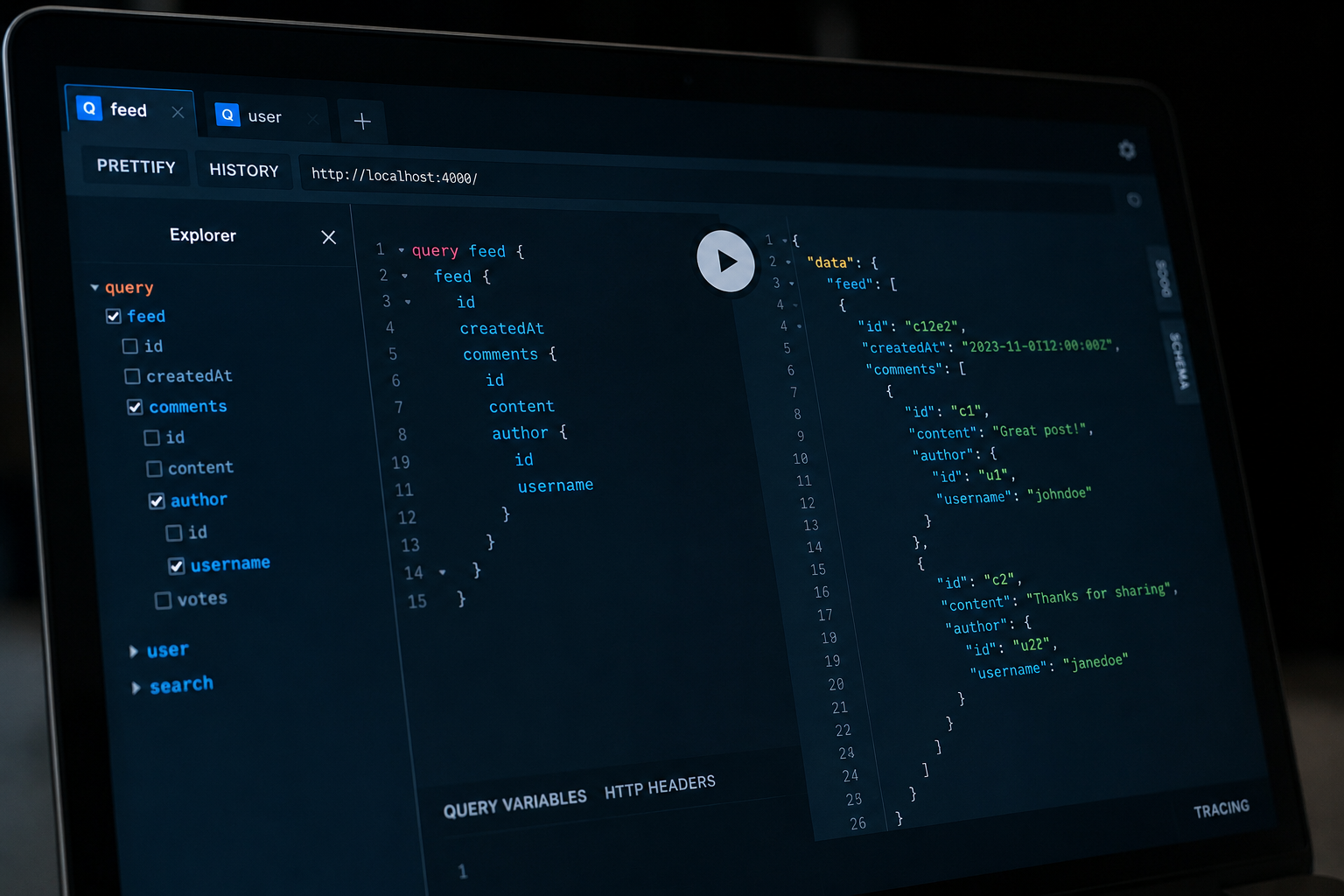
The agent automatically tested sequential identifiers and began enumerating users at scale.
This is where the compromise became catastrophic.
Step 4 Payment Card Exposure
The API responses contained linked payment-card objects.
And not partial metadata.
Actual sensitive payment data.
Including:
PAN
CVV
expiration dates
All returned in plaintext.
No tokenization.
No masking.
No segmentation.
At this stage, the vulnerability was no longer a privilege-escalation issue.
It had become a critical financial-data exposure incident.
Step 5 Business Intelligence Access
Sentinel continued correlating accessible administrative routes.
The agent discovered additional analytics and reporting endpoints exposing internal business metrics:
platform revenue
customer growth statistics
usage analytics
operational dashboards
The system had effectively reconstructed the platform’s internal administrative layer.
The Full Attack Chain
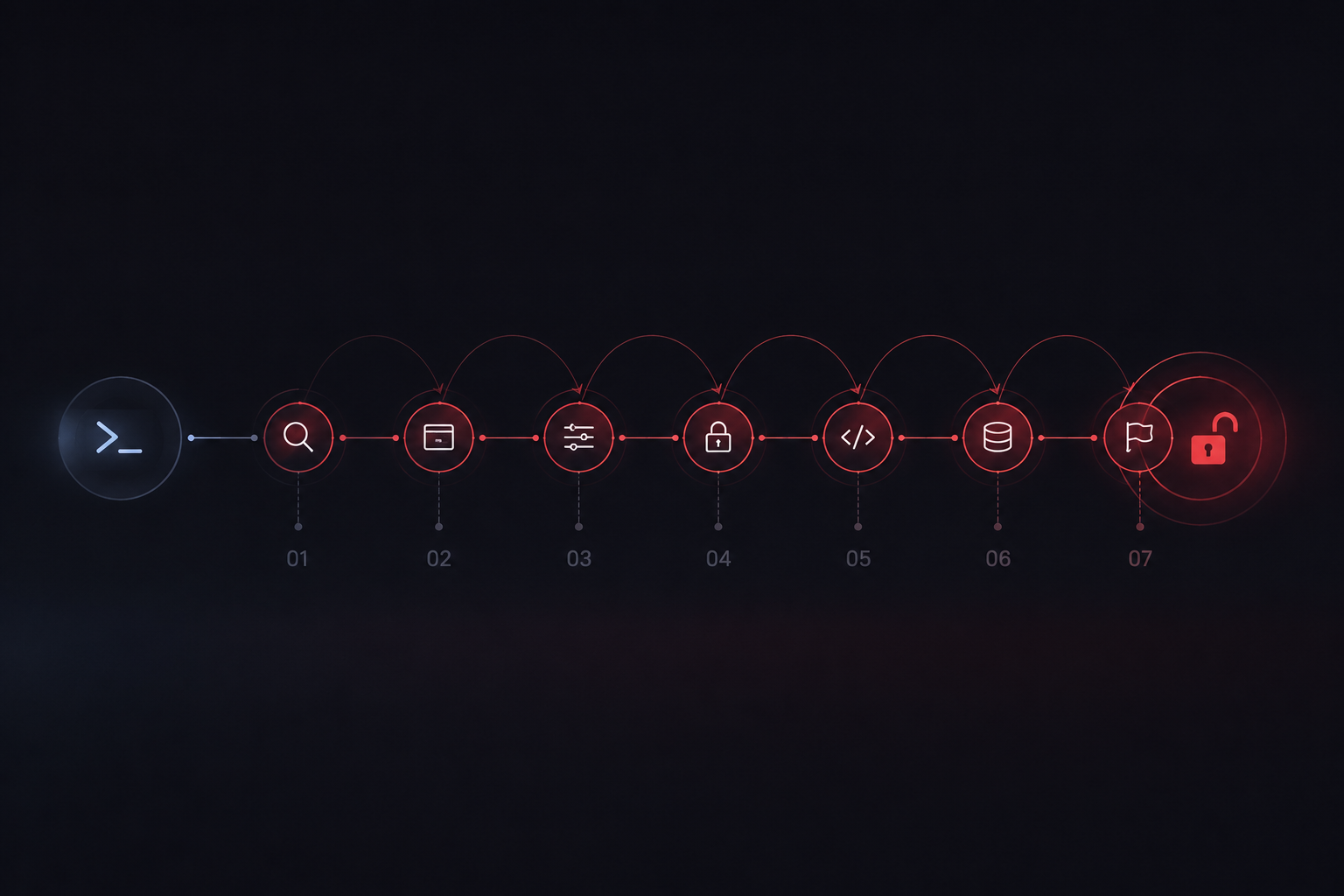
In less than two minutes, Sentinel reconstructed the following chain automatically:
Create admin account
↓
Retrieve admin JWT
↓
Enumerate all users
↓
Extract payment-card data
↓
Access business intelligence systems
No initial foothold.
No insider access.
No credential stuffing.
No advanced exploitation.
Just one broken assumption.
Why Traditional Scanners Miss the Real Risk
A traditional scanner likely would have generated a report similar to:
“Mass assignment vulnerability detected.”
Severity: Medium.
And stopped there.
But vulnerabilities rarely matter because of their technical label alone.
They matter because of what they enable.
Sentinel approached the application differently.
Instead of blindly enumerating vulnerabilities, the system attempted to:
understand workflows
reason about privilege boundaries
correlate exposed behaviors
model attacker objectives
prioritize business impact
That distinction changes everything.
The Real Problem With Modern Applications
Modern architectures create enormous amounts of implicit trust between components.
Internal APIs trust frontends.
Microservices trust internal headers.
Admin panels trust hidden parameters.
GraphQL resolvers trust client-supplied identifiers.
Attackers only need one broken trust boundary to start pulling the thread.
And once reasoning systems can autonomously connect those relationships, small vulnerabilities stop behaving like isolated bugs.
They become full compromise paths.
Automated Pentesting Is Changing
The hardest problem in offensive automation is no longer detection.
It is reasoning.
Understanding how:
a harmless-looking field
becomes privilege escalation
which becomes data access
which becomes platform compromise
That is the real frontier of offensive AI systems.
Not simply finding bugs.
Thinking like an attacker.
And honestly, this is where cybersecurity is starting to become very interesting.
Did you enjoy this article?

Written by
Chris
Tech builder · Agentic AI & offensive security
A tech-obsessed builder, I'm building Sentinelle — an autonomous offensive-security AI agent. I write here about agentic AI, AI-assisted pentesting, and what I learn shipping offensive tooling.